Passion, Presence, and Partnership: Exploring Sex, Women, and Love in a Changing World
Introduction: More Than Chemistry, Less Than Chaos
Let’s talk about the trifecta that has confused, inspired, and consumed humans for centuries: sex, women, and love.
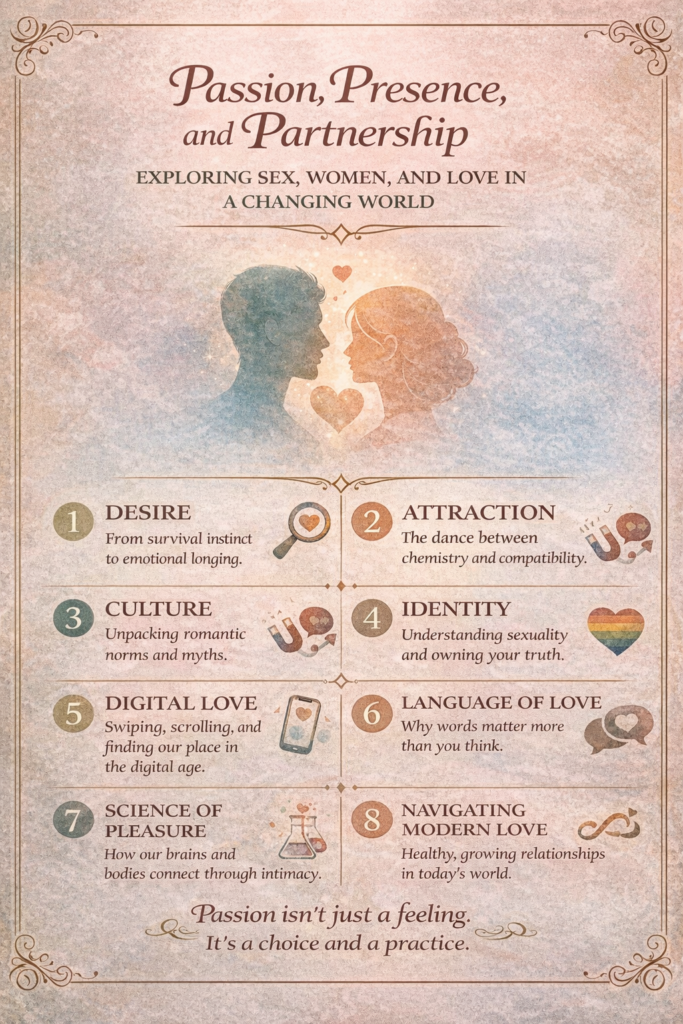
These aren’t just topics — they’re terrains we all navigate. From teenage crushes to adult relationships, late-night doubts to lifelong devotion, our experiences of desire and intimacy are central to how we grow, relate, and become who we are.
This article isn’t about surface-level advice or stereotypes. It’s about diving deeper into psychology, biology, culture, and connection that shape how we approach passion — especially in the modern world, where roles are shifting, values are evolving, and expectations are higher than ever.
1. The Evolution of Desire: Why We Want What We Want
Before dating apps and love languages, there was biology.
Sexual desire is a survival mechanism, deeply rooted in our evolution. For early humans, attraction wasn’t just chemistry — it was a practical path to reproduction and tribe-building. While those primal instincts still influence us today, we’ve layered them with personal values, social norms, and emotional needs.
This helps explain why the “spark” still matters — but also why sustaining connection requires more than attraction.
2. The Psychology of Attraction: What Draws Us In
Attraction is personal, but it’s also patterned.
Psychologists suggest that we’re drawn to certain traits — kindness, intelligence, stability — because they signal safety and compatibility. Even humor plays a role, signaling emotional intelligence and a shared worldview.
But there’s also a subconscious layer. Sometimes we’re attracted to people who mirror our wounds or unmet needs. That’s why self-awareness is key. If you don’t know what you’re truly seeking, you’ll mistake drama for desire.
Attraction is a dance between mystery and familiarity — and being conscious of both helps us choose partners more wisely.
3. The Cultural Lens: How Society Shapes Passion
Sex and love don’t exist in a vacuum. They’re heavily influenced by culture.
From Roman sensuality to Victorian restraint, from Hollywood romance to Instagram-fueled idealism — our understanding of desire is shaped by the messages we absorb. The media often presents love as a grand moment, full of fireworks. But real love? It’s usually quieter. More consistent. Less glamorous.
That’s not boring — that’s mature.
Unlearning cultural myths about sex and gender roles is crucial. A healthy relationship isn’t about control or perfection. It’s about mutual respect, emotional safety, and shared growth.
4. Sexuality and Identity: Owning Who You Are
Sex isn’t just about what we do. It’s about who we are.
Sexuality is deeply tied to identity, yet many still feel pressured to fit into narrow definitions. Exploring your desires, preferences, and boundaries — without shame — is one of the most potent acts of self-discovery.
Whether you identify as straight, queer, fluid, or still figuring it out, the truth is this: you deserve love that honors your whole self.
Healthy sexuality doesn’t demand labels. It requires honesty, empathy, and communication.
5. Digital Love: Swiping, Scrolling, and Searching for Connection
Technology has changed the game. Dating apps offer new ways to connect, but also new challenges. It’s never been easier to find someone — or feel disposable.
In this swipe-happy culture, intentionality is everything. Ask:
- Am I looking for connection or distraction?
- Am I presenting myself honestly?
- Am I open to vulnerability?
The medium has changed, but the core of love remains the same: presence, patience, and shared values.
6. The Language of Love: Why Words Matter
Love lives in how we speak to each other.
From grand gestures to daily check-ins, the words we use shape the emotional climate of our relationships. Compliments, apologies, gratitude, curiosity — these aren’t small things. They’re the glue.
And love doesn’t only speak through language. It shows up in tone, timing, and consistency.
Want to build intimacy? Learn your partner’s love language — and speak it fluently, even if it’s not your first instinct.
7. The Science of Pleasure: Brains, Bodies, and Bonding
Pleasure isn’t just physical. It’s neurological.
Love and sex trigger the brain’s reward centers, releasing dopamine, oxytocin, and serotonin — the neurochemical cocktail of trust and connection. But here’s the twist: the long-term benefits come from emotional safety, not novelty.
This is why calm, secure relationships — the ones built on communication and respect — often feel less “exciting” but last far longer. True passion is sustained through trust, commitment, and emotional attunement.
8. Navigating Relationships in a Changing World
Gender roles are evolving. Expectations around partnership are shifting. More than ever, we need to learn how to build love, not just feel it.
Today’s relationships require:
- Emotional intelligence
- Shared purpose
- Respect for boundaries
- Openness to change
Conflict isn’t failure — it’s an opportunity to grow together. When both people feel safe to be fully themselves, relationships become spaces of transformation.
Conclusion: Passion Isn’t Found — It’s Built
Here’s what we often forget: Passion isn’t something you stumble into. It’s something you choose, nurture, and protect.
Sex, women, and love are not trophies or timelines. They’re ongoing practices. They ask us to show up — not as perfect people, but as present ones.
So whether you’re navigating the early stages of a spark, building something long-term, or healing from something that didn’t work — remember:
- Curiosity is more important than control.
- Presence is sexier than perfection.
- Love isn’t just a feeling. It’s a verb.
In the end, passion isn’t unveiled in a moment. It’s revealed through choices, through growth, through connection — again.
And that?
That’s worth showing up for.
If you find this article helpful, hit that button, like, and share it with your friends and loved ones. It tells the algorithm that this message matters. And subscribe. But don’t do it for me. Do it to help spread the mindset that one day could help a friend or a loved one.
Let’s build a community of people who aren’t waiting to be rescued. Help spread the word and stay one step ahead.
And most importantly, take care of yourself!

Pervaiz Karim
https://NewsNow.wiki
Pervaizrk [@] Gmail.com
Copyright Notice
This article is distributed under the Creative Commons License.
In summary, you may make and distribute copies of this article,
so long as you give the original author credit and, if you alter,
transform, or build upon this work, you distribute the resulting
work only under a license identical to this one.
For the rest of the details of the license,
see http://creativecommons.org/licenses/by-sa/2.0/legalcode