When Access Isn’t Guaranteed: The Quiet Rule Change That Redefined “Your Money”
Introduction: The Moment Things Started Feeling Different
Most people can’t name the day the rules changed.
They just know that something feels off.
Not because money vanished.
Not because banks collapsed overnight.
But because the assumptions people lived by—quietly, confidently—no longer feel solid.
For decades, Americans believed something simple:
If your money were in the bank, you could get it when you needed it.
Recently, that belief cracked.
A new banking rule—passed quietly, explained poorly, and implemented during a low-attention window—expanded the power of institutions to delay, limit, or manage access to deposits during periods of “stress.”
On paper, it’s called stability.
In real life, it feels like uncertainty.
This article is not written to frighten you.
It’s written to name what changed, who it affects most, and how to respond calmly, especially if you are a senior, retiree, or caregiver.
Because the people with the least flexibility suffer first when access becomes conditional.
1. What Actually Changed (Without the Jargon)
The rule does not say your money is gone.
It does not say that banks will collapse tomorrow.
What it does is more subtle—and more important.
It expands the circumstances under which banks and regulators can restrict access to deposits to “preserve liquidity” or “maintain financial stability.”
In plain language, this means:
- Daily withdrawal limits can be lowered
- Large withdrawals can be delayed or reviewed
- Accounts can be temporarily restricted
- Access can be paused during emergencies—even if your balance is intact
The keyword here is temporary.
Temporary measures often show how permanent shifts begin.
2. Why This Was Passed Quietly (And Why Timing Matters)
Big financial changes rarely happen at noon on a Tuesday.
They happen:
- After markets close
- Before weekends
- During distractions
- Wrapped in technical language
There’s a reason.
When people have time to react, systems face pressure.
When people are forced to wait, systems gain control.
Historically, some of the most consequential banking actions, closures, bail-ins, and mergers occur over weekends, when individuals have the fewest options.
That doesn’t guarantee disaster.
But it explains why access timing matters more than balance totals.
3. Access vs. Ownership: The Line We Just Crossed
This rule forces an uncomfortable realization:
Ownership does not automatically mean access.
You may legally own the funds.
They may be insured.
They may appear on your screen.
But your ability to use them immediately can now be managed.
This is a philosophical shift as much as a financial one.
Money used to be:
- Possession-based
- Immediate
- Neutral
Now it is increasing:
- Permission-based
- Conditional
- Monitored
That doesn’t make the system evil.
But it does make it fragile for those who depend on predictability.
4. Who Is Most at Risk (And Why This Is Not Equal)
This is where the conversation must expand beyond young investors and market watchers.
Seniors, retirees, and people with disabilities are disproportionately affected.
Why?
Because they are often:
- Live on fixed incomes
- Depending on timely access to medication, rent, care, and food
- Cannot “wait it out” or replace income easily
- Have limited tolerance for bureaucratic delays
A 10-day review might be annoying for a 30-year-old.
For an 80-year-old relying on Social Security or retirement distributions, it can be catastrophic.
Access delays don’t hurt everyone equally.
5. IRAs, 401(k)s, and the Retirement Shock
One of the most overlooked aspects of this shift is that retirement accounts are not immune.
Even if funds aren’t “seized,” they are still subject to:
- Institutional liquidity rules
- Distribution timing
- Processing delays
- Emergency controls
For retirees, this hits hard.
Many people spent 40 or 50 years doing everything right:
- Saving
- Deferring gratification
- Trusting the system
Now they’re being told—implicitly—that access isn’t guaranteed when systems are stressed.
That creates not just fear, but betrayal.
6. Digital Control, Monitoring, and the Permissioned Future
Another layer of this change involves expanded monitoring.
Banks are now expected to flag:
- Sudden withdrawals
- Asset reallocations
- “Unusual” behavior
- Transfers into alternative assets
This is framed as fraud prevention and security.
But the emotional reality is this:
Financial movement is no longer neutral.
For seniors and disabled individuals—who may need to move money quickly due to health or care needs—being flagged or delayed can be deeply destabilizing.
Especially when resolution depends on call centers, documentation, or technology they may struggle to use.
7. The ATM Problem: Centralization Equals Fragility
Modern money depends on networks.
ATMs, cards, apps, and payment rails all rely on centralized infrastructure.
Centralization brings convenience.
It also creates single points of failure.
If networks pause—even briefly—money still exists but can’t be used.
This is why access matters more than theoretical ownership.
8. Why Stress Responses Always Hit the Vulnerable First
When systems feel threatened, they tighten.
They prioritize:
- Stability over comfort
- Institutions over individuals
- Containment over explanation
This is not malice.
It’s a pattern.
But patterns have consequences.
History shows that during financial stress:
- The elderly suffer first
- The sick suffer more
- Those without buffers suffer longest
Which is why calm preparation matters.
9. This Is Not About Panic—It’s About Dignity
No one is saying “run for the hills.”
What people are asking for is dignity:
- The ability to pay bills on time
- The ability to access care
- The ability to live without constant anxiety
When access becomes uncertain, stress becomes chronic.
And chronic stress destroys health faster than almost anything else.
10. The Long View: Systems Change, Human Needs Don’t
This rule does not mean collapse is imminent.
It does mean we are in a transition phase.
Transitions are hardest on those with:
- Fixed incomes
- Limited mobility
- Limited time
Which means ethical conversations must include them—not leave them behind.
SIDEBAR: What This Means If You Live on a Fixed Income
If you are a senior, retiree, or person with a disability, here’s the most important thing to understand:
This is not about fear.
It’s about reducing dependence on a single point of access.
Consider these facts:
- Delays can happen even when money is “yours.”
- Reviews don’t follow your medical or care schedule
- Call centers don’t prioritize urgency
- Systems assume flexibility that many people don’t have
What matters most is predictability.
Small disruptions affect you more than they affect others—and that’s not a failure on your part. It’s a system design issue.
Your needs are legitimate.
Your concerns are rational.
And planning is not paranoia—it’s self-respect.
ONE-PAGE SAFETY CHECKLIST FOR FAMILIES & CAREGIVERS
This checklist is not financial advice. It’s practical life resilience.
Access & Liquidity
☐ Keep a modest cash reserve for short disruptions
☐ Know your bank’s daily withdrawal limits
☐ Avoid relying on a single card or account
Bill & Care Continuity
☐ Pay essential bills early when possible
☐ Keep a written list of monthly obligations
☐ Maintain emergency contacts for caregivers
Diversification (Not Panic)
☐ Use more than one financial institution
☐ Don’t keep all funds dependent on one system
☐ Understand processing times for retirement distributions
Health & Stress
☐ Avoid doom-scrolling or constant monitoring
☐ Prioritize sleep and routine
☐ Ask for help—stress thrives in isolation
Communication
☐ Discuss plans with family or caregivers
☐ Write down what matters most if access is delayed
☐ Keep documents organized and reachable
The goal is calm redundancy—not fear.
Closing Reflection: Awareness Is an Act of Care
This rule change doesn’t mean the end of banking.
It does mean the end of certain assumptions.
And when assumptions change, compassion matters more than ideology.
Young people can hustle through disruption.
Seniors and disabled individuals often cannot—and shouldn’t be expected to.
A humane society plans for that.
This conversation isn’t about predicting collapse.
It’s about protecting dignity, health, and peace of mind.
Because money is not just math.
It’s access.
It’s timing.
It’s the ability to live without fear.
And that is worth protecting—thoughtfully, calmly, and together.
Let’s build a community of people who aren’t waiting to be rescued. Help spread the word and stay one step ahead.
And most importantly, take care of yourself!
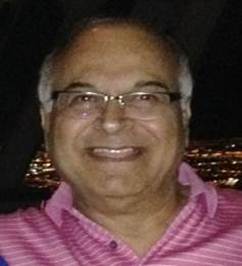
Pervaiz Karim
https://NewsNow.wiki
Pervaizrk [@] Gmail.com
Copyright Notice
This article is distributed under the Creative Commons License.
In summary, you may make and distribute copies of this article,
so long as you give the original author credit and, if you alter,
transform, or build upon this work, you distribute the resulting
work only under a license identical to this one.
For the rest of the details of the license,
see http://creativecommons.org/licenses/by-sa/2.0/legalcode