How the American Bison Came Back from Extinction
A Story of Loss, Resilience, and the Return of the Prairie
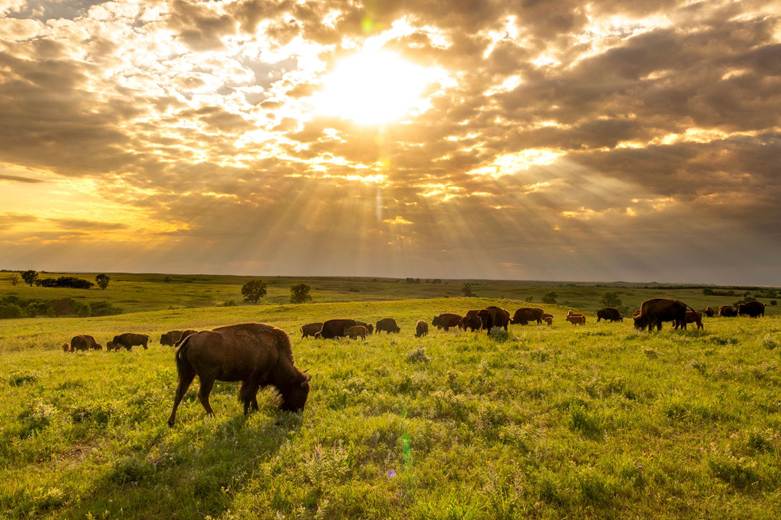
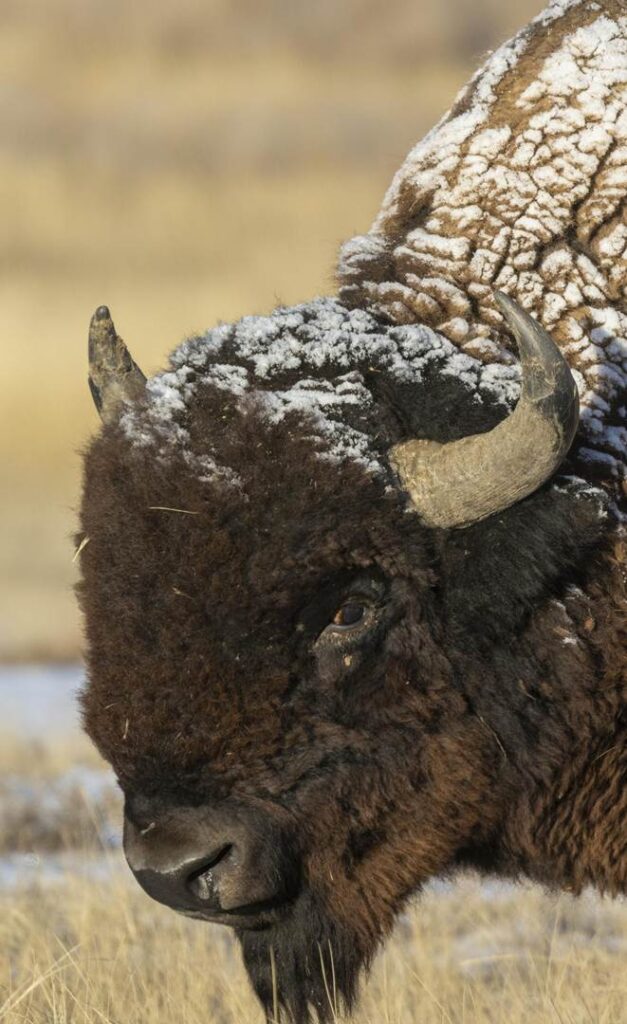
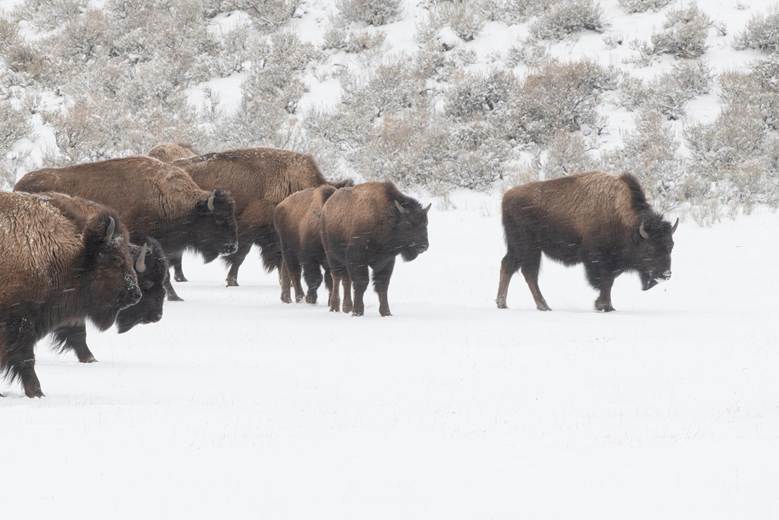
There was a time when the North American prairie seemed to move.
From horizon to horizon, millions of dark shapes rolled across the grasslands like waves on a vast inland sea. Early explorers described the spectacle with disbelief: herds of animals so large that the earth trembled beneath their hooves.
These animals were American bison, the continent’s largest land mammals. For thousands of years, they defined the rhythm of the Great Plains. But within a few decades in the 19th century, this living ocean nearly vanished.
By the 1880s, the great herds that once numbered in the tens of millions had collapsed to only a few hundred animals left in the wild. The disappearance of the bison was one of the most dramatic wildlife collapses in human history.
And yet today, against extraordinary odds, the species survives.
The story of the American bison is not only about a near-extinction. It is about something deeper: how a society can recognize its mistakes and begin the long, difficult work of restoring what was lost.
When the Prairie Was Alive
To understand the scale of the bison’s comeback, we must first imagine the world before their decline. Before railroads, highways, and fences divided the continent, the Great Plains stretched almost endlessly across North America. Tall grass waved in the wind, nourished by deep soil and seasonal rains.
And within this ecosystem, the bison roamed.
Scientists estimate that between 30 and 60 million bison once lived across the United States and Canada.
Their migrations shaped the land itself. Herds could stretch for miles. When they moved, they grazed intensely in one place and then moved on, allowing grass to regenerate naturally.
Their hooves churned the soil. Their grazing encouraged plant diversity. Their presence supported birds, insects, predators, and countless other species.
The bison was not simply another animal. It was what ecologists call a keystone species — an organism that plays a crucial role in maintaining the balance of its ecosystem.
Where bison roamed, the prairie flourished.
A Cultural Icon of the West
For Indigenous nations across the Plains, bison were central to life.
They provided food, clothing, tools, shelter, and spiritual meaning. Nothing from the animal was wasted. Communities developed deep knowledge of migration routes, seasonal movements, and respectful hunting traditions.
The relationship between people and bison lasted thousands of years without destroying the species.
But in the 19th century, that balance was shattered.
The Collapse of the Great Herds
As Euro-American settlers expanded westward across the continent, the prairies began to change.
Railroads carved through migration routes. New towns and farms appeared across the plains. Hunting technologies have improved dramatically.
And demand for bison products exploded. Bison hides became valuable commodities, especially for industrial belts used in factory machines. Professional hunters began killing bison on an enormous scale.
Often, the animals were slaughtered primarily for their skins. The rest of the body was left behind.
Prairies became littered with bones. Photographs from the late 1800s show massive piles of bison skulls stacked outside factories — haunting evidence of a wildlife collapse unfolding at industrial speed.
Within a single generation, the population plummeted. What had once been tens of millions of animals fell to perhaps only 300 to 800 individuals remaining in the wild.
The living sea of bison had almost completely evaporated.
A Scientist Raises the Alarm
In 1886, American zoologist William Temple Hornaday traveled west on a mission for the Smithsonian Institution.
His goal was simple: document the remaining bison.
But what he discovered shocked him. The great herds were gone. The animals that once defined the prairie had been reduced to scattered pockets of survivors.
Hornaday understood something important.
If nothing changed, the bison would vanish entirely. So, he began sounding the alarm.
He wrote reports, created maps showing the species’ collapse, and worked tirelessly to convince the public and politicians that immediate action was necessary.
His efforts helped spark one of the earliest wildlife conservation movements in American history.
Yellowstone: A Last Refuge
One of the most important steps in saving the bison came with the creation and protection of Yellowstone National Park.
Yellowstone was established in 1872, becoming the first national park in the United States.
But in the decades that followed, its role in bison conservation became critical.
At one point, only 23 wild bison remained within Yellowstone. Park managers protected them fiercely.
Through careful management and protection from hunting, the herd slowly grew. Over time, Yellowstone’s population reached several thousand animals. These bison became some of the last genetically pure descendants of the original wild herds.
And they would play an essential role in the species’ recovery.
The Prairie Changes Forever
Even as bison populations stabilized in protected areas, the prairie itself had changed dramatically.
The rich soils of the Great Plains were among the most fertile in the world. Farmers quickly recognized this potential.
Across the 19th and 20th centuries, vast grasslands were converted into farmland. Crops replaced native grass. Fences divided once-open landscapes.
The ecosystem that had supported millions of bison was fragmented.
Without bison, the prairie began to lose some of its ecological resilience. Scientists eventually realized something remarkable: restoring the prairie meant restoring the bison.
Why Bison Matter to the Land
Bison are ecosystem engineers.
Their grazing patterns are unlike those of cattle. Bison typically eat grass, but leave many other plants untouched. This allows a wide diversity of plant species to grow. Their heavy hooves break up soil crusts, helping seeds take root.
And their movements across the land distribute nutrients naturally. Studies have shown that areas grazed by bison can experience a doubling of native plant diversity over time.
In other words, the prairie does not merely survive with bison. It thrives.
A New Conservation Movement
Beginning in the late 20th century and accelerating in the early 2000s, conservation organizations began exploring a bold idea:
Could the American prairie be restored?
Groups such as The Nature Conservancy and American Prairie began working to reintroduce bison into large grassland ecosystems.
Their goal was not simply to preserve animals in parks or ranches. It was to restore a functioning prairie ecosystem — one where bison could once again roam across vast landscapes.
The challenge was enormous. Modern landownership patterns, agricultural interests, and infrastructure made it difficult to recreate the open prairie of the past. But progress slowly began.
The Return to the Wild
In recent years, one of the most hopeful developments occurred when bison were released into parts of Badlands National Park and other restored prairie landscapes.
For the first time in nearly 150 years, some bison were allowed to roam in conditions closer to their original wild environment.
No fences. No ranch management. Just open prairie.
Though these herds remain relatively small, they represent something powerful: the beginning of a new chapter.
The Numbers Today
Today, there are approximately 500,000 bison living in North America.
At first glance, that number seems encouraging. But there is an important distinction. Most of these animals live on ranches and are managed like livestock.
Only around 20,000 bison live in conservation herds on grasslands, and even these are usually within fenced preserves or national parks. Truly wild, free-roaming herds remain rare.
The dream of a fully restored prairie is still a work in progress.
Challenges on the Road Ahead
Restoring bison to the prairie involves more than releasing animals.
Large landscapes must be protected. Migration corridors must be maintained. Conflicts with farming and ranching communities must be addressed thoughtfully. Fire — once a natural force shaping the prairie — must also be carefully reintroduced to maintain healthy grasslands.
These challenges require collaboration between scientists, conservationists, Indigenous communities, and landowners.
It is a complex task. But it is not impossible.
The Vision of a Wild Prairie
Some conservationists dream of a future where bison once again roam across millions of acres of prairie.
Not in the tens of millions as before — that world is gone.
But perhaps in large, interconnected herds moving across landscapes that resemble the historic grasslands.
In some proposals, herds from Yellowstone, Indigenous reservations, wildlife refuges, and conservation lands could eventually connect into a broader prairie ecosystem.
It would be one of the most ambitious wildlife restoration projects on Earth. And the first steps are already underway.
Lessons from the Bison’s Comeback
The story of the American bison offers something rare in environmental history.
A reason for hope.
It reminds us that human actions can cause devastating damage to ecosystems.
But it also shows that people can change. Scientists, activists, policymakers, and everyday citizens came together to protect a species that once seemed destined for extinction. Their work continues today.
A Symbol of Resilience
For many people, bison represent something larger than wildlife conservation.
It symbolizes resilience. These animals survived one of the most intense hunting campaigns in history.
They endured habitat destruction, near extinction, and centuries of human pressure.
Yet they are still here. Still walking in the grasslands. Still shaping the prairie.
The Prairie Breathes Again
On a quiet evening in the American West, if you stand on the open prairie and watch the horizon carefully, you might see something remarkable.
A herd of bison is moving slowly through the tall grass. Their massive shoulders rise and fall like dark waves. The land seems alive again.
It is not the same prairie that existed centuries ago. But it is recovering.
And with every step those animals take, the prairie remembers what it once was — and what it might become again.
The return of the American bison is more than a conservation success. It is proof that even after great loss, nature can find its way back.
If we give it the chance.
If you find this article helpful, hit that button, like, and share it with your friends and loved ones. It tells the algorithm that this message matters. And subscribe. But don’t do it for me. Do it to help spread the mindset that one day could help a friend or a loved one.
Let’s build a community of people who aren’t waiting to be rescued. Help spread the word and stay one step ahead.
And most importantly, take care of yourself!

Pervaiz Karim
https://NewsNow.wiki
PervaizRK [@] Gmail.com
Copyright Notice
This article is distributed under the Creative Commons License.
In summary, you may make and distribute copies of this article,
so long as you give the original author credit and, if you alter,
transform, or build upon this work, you distribute the resulting
work only under a license identical to this one.
For the rest of the details of the license,
see http://creativecommons.org/licenses/by-sa/2.0/legalcode