Snow Leopard’s Fight for Survival
Snow Leopard’s Fight for Survival. A Story of Resilience in the Himalayas
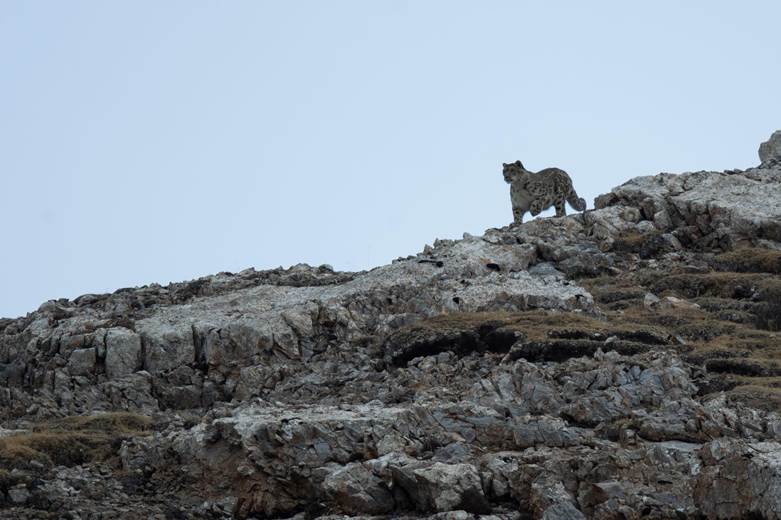
High above the forests, where the air grows thin, and the mountains seem to touch the sky, there exists a world few humans ever see. It is a place of wind and stone. Of glaciers and quiet valleys. Of a balanced life on a fragile edge.
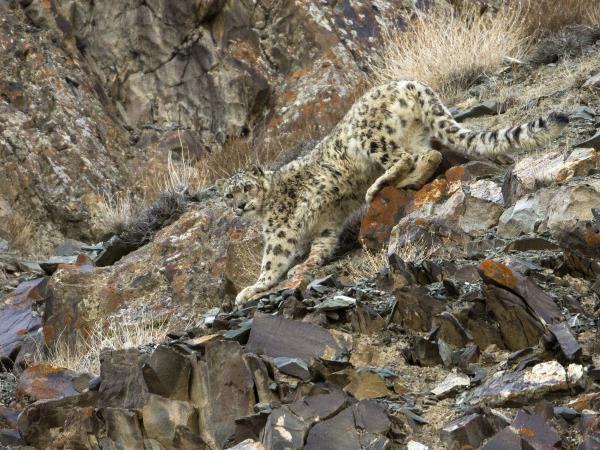
Here, at altitudes above 4,000 meters, the snow leopard moves like a ghost across the Himalayan cliffs. Elusive, solitary, and extraordinarily resilient, this rare predator survives where few animals can. Yet survival in the Himalayas is never guaranteed. Every season tests the limits of strength, instinct, and endurance.
One mother snow leopard, raising her cubs in this unforgiving wilderness, reveals the deeper story of life in the mountains — a story of danger, patience, and quiet perseverance.
The Kingdom Above the Clouds
The Qinghai–Tibetan Plateau is one of the harshest ecosystems on Earth. Temperatures plunge below freezing even in summer nights. Oxygen levels are painfully low. Snowstorms can arrive suddenly, burying the landscape in white silence. Food is scarce, and survival demands extraordinary adaptation.
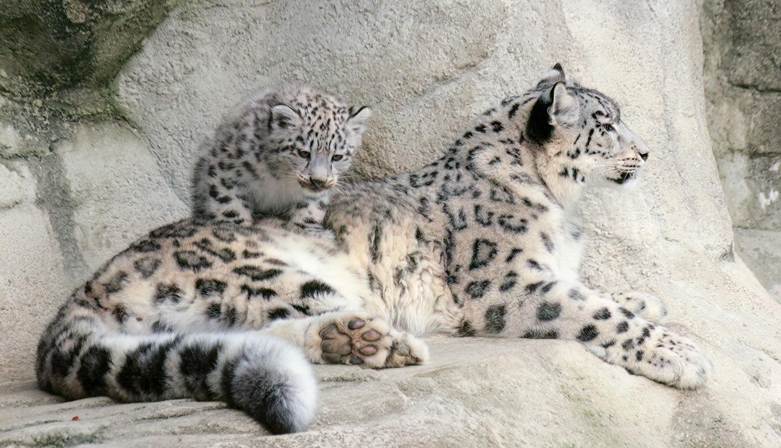
For the snow leopard, this rugged terrain is both refuge and battlefield. Its thick fur insulates against brutal cold. Wide, fur-covered paws act like natural snowshoes. A long tail helps maintain balance on steep cliffs and doubles as a blanket when resting.
But adaptation alone is not enough. In this world, predators compete constantly. Wolves roam the valleys. Bears wander the slopes. Foxes hunt the grasslands. Each creature struggles for the same limited resources. And yet the snow leopard remains one of the most mysterious animals on Earth.
Even today, scientists know surprisingly little about their daily lives, their territories, and their family dynamics. Their secretive nature has protected them for centuries. But it has also made their survival difficult to study.
A Mother’s Quiet Determination
In this vast mountain wilderness, one female snow leopard prepares for the most difficult task of her life: raising cubs. Snow leopards are solitary animals. They rarely tolerate the presence of others outside the breeding season. Males and females come together briefly to mate, then separate again.
If the female becomes pregnant, she must raise her cubs alone. The den must be hidden — far from predators, far from rival males, and often far from food. After months of careful preparation, the moment arrives.
Two tiny cubs are born high in a rocky den, blind and helpless, entirely dependent on their mother. Their eyes remain closed for days. Their world is warmth, milk, and the steady heartbeat of the only protector they know. For the mother, life becomes a delicate balance. She must protect them from danger while somehow finding enough food to survive. And the mountains are not forgiving.
Neighbors in a Dangerous Land
The snow leopard does not live alone in these mountains. The same cliffs and valleys are shared by an entire cast of wildlife.
Bharal sheep — also known as blue sheep — graze on steep slopes. They are among the snow leopard’s most important prey species.
Musk deer wander the forests. Tibetan foxes hunt small rodents called pika. Above them circle vultures, always searching for signs of death. And sometimes, larger predators appear.
The Tibetan blue bear, a rare relative of the brown bear, roams the plateau. Powerful and unpredictable, it can challenge any other animal in the region. Wolves also hunt here in coordinated packs, capable of attacking large animals such as yaks.
For the snow leopard mother, every neighbor is a potential threat.
Many predators will kill rival cubs if given the chance. Removing another predator’s youth eliminates future competition. That is why the mother snow leopard rarely leaves the den during the first weeks.
Protection comes before hunger. But hunger always returns.
The Humans of the Mountains
The Himalayas are not empty. Small Tibetan communities live here, raising yaks on the high grasslands. These animals provide milk, meat, fuel, and income — everything a family needs to survive in such a remote place.
But where livestock exists, predators inevitably follow. For generations, snow leopards and herders have lived in uneasy conflict. A single leopard can kill several yaks in a season. For families who depend entirely on their animals, such losses can be devastating. The tension between humans and predators once led to widespread hunting.
But conservation efforts began changing this relationship. Around the year 2000, parts of this region were designated as protected reserves, and guns were confiscated from local communities.
Predator populations began to recover. Snow leopards returned. So did wolves and bears.
Nature slowly reclaimed the mountains. Yet the challenge remained: how to protect wildlife without destroying the livelihoods of the people who share their land.
An Unlikely Partnership
Three young yak herders — Ziding, Peng, and Dajie — grew up hearing stories about the “ghost of the mountains.”
Snow leopards have always fascinated them. Instead of hunting the animal, they decided to document it.
Pooling their savings, they borrowed a camera and began filming the wildlife around their village. At first, they barely understood how the equipment worked. But they understood the land. They knew the valleys, the cliffs, and the trails that animals followed. Slowly, their persistence paid off.
They captured rare footage of snow leopards — moments that scientists and filmmakers had struggled for years to record.
Their project eventually caught the attention of wildlife photographer Xi Zhinong, who came to help them refine their skills. Together, they began documenting the life of the mother snow leopard and her cubs.
Life Begins in the Den
Inside the rocky den, the cubs grow quickly. Their blue eyes slowly open. Their small bodies begin to strengthen. At first, they barely move beyond the warmth of their mother’s fur. But curiosity grows.
Soon they begin crawling, tumbling, and wrestling with each other. Play becomes practice — training for the hunting skills they will one day need to survive. Each cub develops a distinct personality.
One is playful and restless, constantly pushing boundaries. The other is calmer and more cautious.
Even among animals, individuality emerges. Scientists call this behavioral variability — the subtle differences that shape survival strategies. And in the wild, personality can mean the difference between life and death.
Hunger Forces a Decision
Weeks pass. The cubs grow stronger, but the mother grows weaker. Producing milk demands enormous energy. Up to 10% of her body weight is converted into nourishment for the cubs.
Eventually, she must leave the den to hunt. The decision is agonizing. Leaving the cubs means exposing them to danger. But staying means starvation.
One day, as clouds gather above the mountains, the mother slips quietly away. The cubs are alone.
The First Steps Into the World
While their mother hunts, curiosity pushes the cubs toward the edge of the den. For the first time, they stepped outside. The mountains stretch endlessly around them. Wind whistles across the cliffs. Strange smells drift through the air. The world is vast, confusing, and thrilling. They explore cautiously. Every rock becomes a new discovery.
But the mountains are not a playground. They are a survival test. Predators roam nearby. Steep cliffs drop into dangerous ravines. Sudden storms can transform the landscape in minutes.
The cubs do not yet understand these dangers.
When Nature Tests Everything
In the Himalayas, the weather changes quickly. What begins as rain can become snow within hours. During one such storm, something unexpected happens.
The den is suddenly empty. The cubs are gone. For the filmmakers and herders who have followed this family for months, the silence is devastating.
Young snow leopards face brutal odds. They can fall from cliffs. Lose their way. Freeze in sudden storms. Or become prey themselves. Survival rates for cubs in the wild are notoriously low.
Hope begins to fade. Local monks offer prayers for the cubs, reflecting a Buddhist belief that all life is sacred and deserving of compassion. Prayer flags are raised, sending blessings into the mountain winds. But the mountains remain silent.
A Glimpse of Hope
Weeks later, something remarkable happens. High above the cliffs, a familiar call echoes across the rocks.
The mother snow leopard appears again. And beside her — unbelievably — are two cubs. They survived. Against storms, predators, and the relentless challenges of the mountains, the family endures.
For the herders who filmed them, the moment feels almost magical. The “ghost of the mountains” lives on.
Lessons From the Snow Leopard
The story of this snow leopard family is not just about wildlife. It reflects deeper truths about life itself.
Survival often depends on patience. On resilience. On the ability to adapt when conditions seem impossible.
The snow leopard cannot control the storms of the Himalayas. It cannot eliminate its rivals or guarantee food.
But it persists. Step by step. Cliff by cliff. Season by season. And that persistence is what allows life to continue.
The Future of the Ghost of the Mountains
Today, snow leopards remain endangered across much of their range.
Habitat loss, climate change, and human conflict threaten their survival.
Yet there is hope.
Conservation programs that involve local communities — like compensation programs for livestock losses — are helping people and predators coexist. Education, camera traps, and community-based wildlife tourism are creating new ways for villagers to benefit from protecting these animals.
The snow leopard’s future will depend not only on scientists and governments, but on the people who share its mountains.
Final Reflection
Some animals rule through strength. Others survive through silence.
The snow leopard belongs to the second kind. It walks unseen across the highest mountains on Earth — a symbol of endurance in one of the planet’s most unforgiving landscapes.
Watching a mother snow leopard raise her cubs reminds us that survival is rarely dramatic.
It is quiet. Persistent. And deeply fragile.
In the thin air of the Himalayas, where earth rises toward the sky, the ghost of the mountains continues its ancient journey.
One careful step at a time.
If you find this article helpful, hit that button, like, and share it with your friends and loved ones. It tells the algorithm that this message matters. And subscribe. But don’t do it for me. Do it to help spread the mindset that one day could help a friend or a loved one.
Let’s build a community of people who aren’t waiting to be rescued. Help spread the word and stay one step ahead.
And most importantly, take care of yourself!

Pervaiz Karim
https://NewsNow.wiki
PervaizRK [@] Gmail.com
Copyright Notice
This article is distributed under the Creative Commons License.
In summary, you may make and distribute copies of this article,
so long as you give the original author credit and, if you alter,
transform, or build upon this work, you distribute the resulting
work only under a license identical to this one.
For the rest of the details of the license,
see http://creativecommons.org/licenses/by-sa/2.0/legalcode