The Mortality Paradox: Exploring Death, the Afterlife, and What It Means to Live Fully
Death is the one certainty in life—and yet, it remains one of the most profound mysteries. The human mind, capable of creating civilizations and decoding the cosmos, has never truly come to terms with mortality. And so, for millennia, we have wrestled with a question that lies at the core of existence: what happens when we die, and how should the knowledge of our inevitable end shape the way we live?
This article unravels the complex tapestry of death—from ancient Egyptian burial rituals to the futuristic promises of digital immortality. Along the way, we examine the philosophies, religions, scientific inquiries, and psychological insights that frame our understanding of mortality, and we explore how embracing death might lead us to live more fully.
A Historical Glimpse at Death
Death has never been a mere biological fact; it has been a cultural anchor. From mummification in ancient Egypt, where death was merely a transition to another realm, to Viking beliefs in Valhalla for warriors fallen in battle, our ancestors honored death with ceremony and meaning. In medieval Europe, Christianity framed death as a divine judgment, while Hindu and Buddhist cultures saw it as a gateway to rebirth.
These rituals and beliefs gave people comfort, continuity, and context. More importantly, they highlighted something universal: death isn’t just about the end—it’s about what we think comes after.
Philosophers and the Great Unknown
Socrates welcomed death, believing it would either bring peaceful oblivion or a better world. Epicurus taught that fearing death was irrational because it represented the end of sensation—where there is no awareness, there is no pain. Heidegger, in contrast, argued that being aware of death is what makes us authentically human. Camus, ever the existentialist, advised us to rebel against the absurdity of existence by living fully, even if death renders all efforts seemingly futile.
In Eastern philosophies, death is seen more as a process than an event. Hinduism and Buddhism regard it as part of a cycle, and liberation lies in breaking free from it.
The Role of Religion: Maps to Beyond
Religious teachings have provided humanity with some of the most detailed visions of the afterlife. Christianity speaks of heaven, hell, and purgatory; Islam describes paradise and judgment; Hinduism and Buddhism discuss cycles of reincarnation and eventual liberation; Judaism offers concepts like Olam Ha-Ba, or the World to Come.
These narratives do more than promise reward or punishment—they serve as ethical frameworks and offer comfort in the face of the unknown. Indigenous religions further expand this tapestry, often emphasizing the active presence of ancestors in daily life.
Science and the Final Frontier
Scientific advancements have illuminated the mechanics of dying—what happens at the cellular level, how the brain shuts down, and what constitutes clinical death. Near-death experiences (NDEs), once considered purely anecdotal, are now subjects of neurological and psychological study. While science may not yet explain what happens after death, it helps us understand how we experience dying and the complexity of consciousness itself.
Fields such as thanatology (the study of death) and palliative care are expanding our approach to end-of-life care, placing greater emphasis on dignity, comfort, and patient autonomy.
Ethics, Euthanasia, and Autonomy
Modern mortality raises pressing ethical questions. Should individuals have the right to end their own lives? What is a “good death”? Euthanasia, assisted suicide, and the legal right to die remain contentious. Meanwhile, debates about organ donation, advance directives, and the use of life-sustaining technologies add more layers to the moral complexity of dying.
At the heart of these issues lies a deep philosophical question: do we own our lives, and by extension, our deaths?
The Psychological Weight of Death
Death doesn’t just affect the dying—it profoundly impacts the living. From Elisabeth Kübler-Ross’s five stages of grief to the Terror Management Theory (which explores how the awareness of death influences behavior), psychology provides tools for navigating loss.
Grief is not a linear process, nor is it something to “fix.” It’s a transformative journey that reshapes identity, relationships, and meaning.
Legacy and the Human Desire for Immortality
We may not live forever, but our desire to be remembered is universal. People create legacies through children, art, innovation, and social contribution. The urge to leave something behind reflects our need to matter—to know that our lives were not lived in vain.
Even in digital spaces, our social media profiles and virtual footprints become modern-day memorials, raising questions about how technology reshapes remembrance.
Rituals: Anchoring the Soul
Funerals, memorials, and mourning ceremonies help us confront loss while celebrating life. Whether it’s the Day of the Dead in Mexico, Shiva in Judaism, or a green burial in a forest, rituals provide meaning and closure. They ground us in tradition and community.
These practices are evolving. Virtual funerals, eco-burials, and life celebrations are reframing how we say goodbye.
Technology, Transhumanism, and the Future of Death
From cryonics and brain uploading to AI avatars of deceased loved ones, technology is reshaping our relationship with death. Transhumanist thinkers even argue that aging and death are technical problems to be solved.
But this brings ethical tension: If death disappears, what happens to the value of life?
Death as a Mirror to Life
Ultimately, our confrontation with death shapes our experience of life. The awareness of our own impermanence can be a catalyst for purpose. Knowing that time is limited compels us to prioritize love, creativity, connection, and meaning.
By making peace with mortality, we may paradoxically discover what it truly means to live.
Final Thoughts
Death is not the opposite of life—it is a part of it. In confronting mortality, we embark on a journey not of despair, but of deeper understanding. Through philosophy, science, spirituality, and art, we seek to unravel not just what it means to die—but what it means to be.
And maybe, just maybe, that is the most incredible quest of all.
If you find this article helpful, hit that button, like, and share it with your friends and loved ones. It tells the algorithm that this message matters. And subscribe. But don’t do it for me. Do it to help spread the mindset that one day could help a friend or a loved one.
Let’s build a community of people who aren’t waiting to be rescued. Help spread the word and stay one step ahead.
And most importantly, take care of yourself!
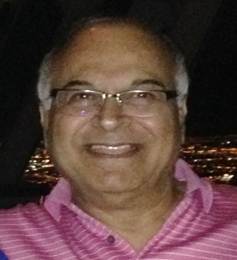
Pervaiz Karim
https://NewsNow.wiki
Pervaizrk [@] Gmail.com
Copyright Notice
This article is distributed under the Creative Commons License.
In summary, you may make and distribute copies of this article,
so long as you give the original author credit and, if you alter,
transform, or build upon this work, you distribute the resulting
work only under a license identical to this one.
For the rest of the details of the license,
see http://creativecommons.org/licenses/by-sa/2.0/legalcode